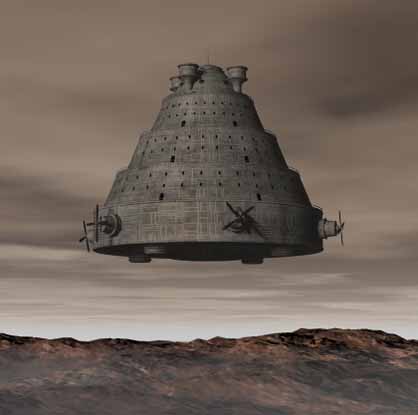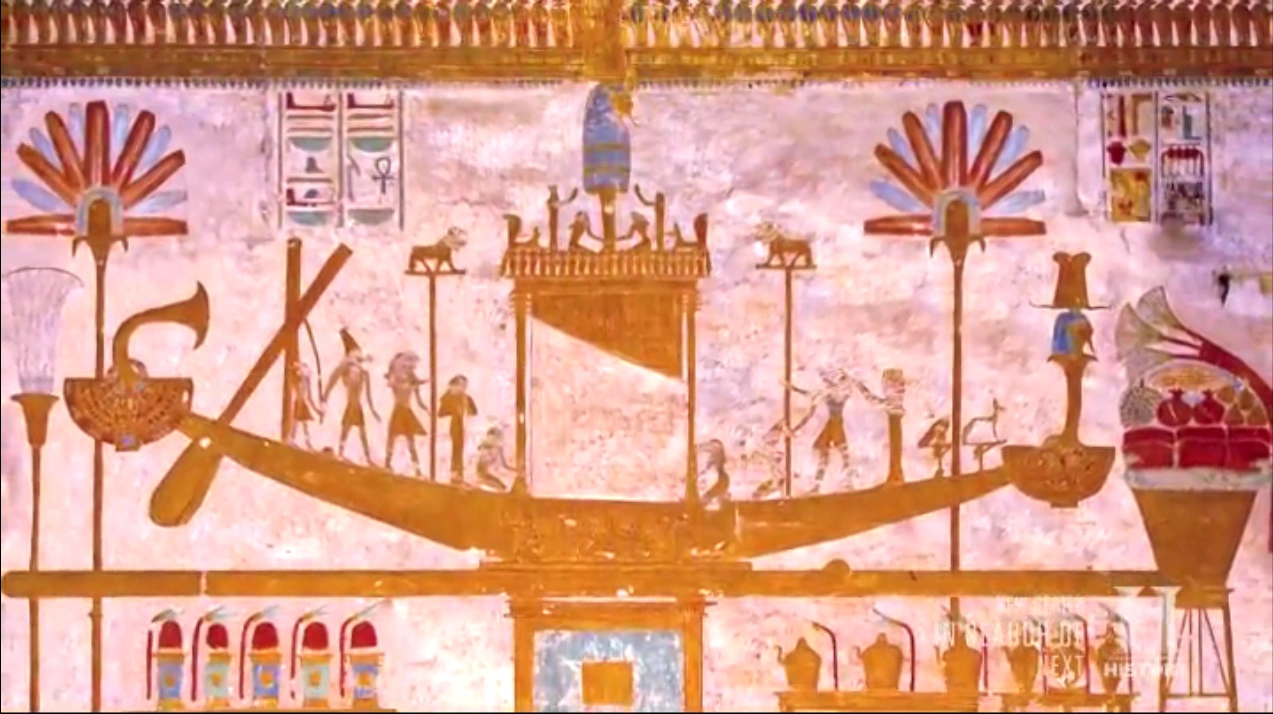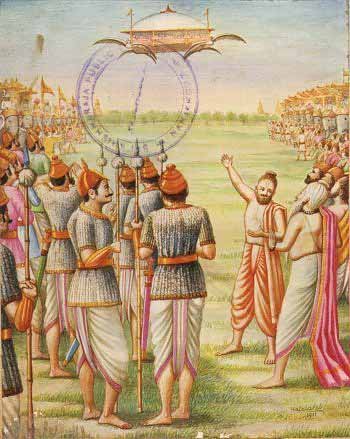
Sunday, September 01, 2019

My Top 100 Rock Songs

e 70s and not a single song features from past the year 2000, proving that these songs really do get better with time.

 
1) LED ZEPPELIN - STAIRWAY TO HEAVEN
It had to be this, right? Being "banned in guitar shops" doesn't alter the fact that this epic from Zep's fourth album is undeniably better than ANY other song because it somehow manages to cram pretty much every single rock genre into one sprawling eight minute slice of brilliance. Oh, and don't forget THAT guitar solo...
It's worth noting that 'Stairway' picked up 15% of all the votes cast - more than twice that of its nearest rival.
2) QUEEN - BOHEMIAN RHAPSODY
Easily the most subversively ingenious song to ever reach number 1 in the UK charts. The fact that it did it TWICE nearly 20 years apart was just showing off. This song, above all others, summed up exactly what Queen were whilst changing rock music forever
3) LYNYRD SKYNYRD - FREE BIRD
Perhaps the greatest compliment you can pay Free Bird is that when that fade starts to happen about 30 seconds before the end you simply don't want it to end. It's like five minutes of foreplay followed by an almighty explosion of duelling guitar solos and Southern rock brilliance.
4) DEEP PURPLE - SMOKE ON THE WATER
Who would have thought that the story of a burning casino would have become the most recognisable rock song in history? Undeniably iconic, and a brilliant song to boot. That opening riff will be inspiring wannabe guitarists for the rest of time.
5) PINK FLOYD - COMFORTABLY NUMB
Another epic, and another song which boasts a solo that still makes grown men weep every time they hear it. This is the defining moment in a catalogue that is almost without equal.
6) LED ZEPPELIN - KASHMIR
No track more perfectly represents the sum of Zep's parts than Kashmir - every member working in absolute harmony, with no solos, no vocal histrionics, no showboating from any member. It's dramatic, beautiful and just as startling every time you hear it.
7) RAINBOW - STARGAZER
Absolutely bursting with attitude and power, Stargazer was born to be played VERY loud. It turned Dio into a legend, and reminded everyone that with a guitar in his hand, Ritchie Blackmore was unbeatable.
8) FREE - ALL RIGHT NOW
A staple of rock radio since the moment it was released in 1970, All Right Now is an unceremoniously joyous record that simply screams sunshine and happier times. Not to mention that pretty much every human on the planet can probably sing the chorus, even if they have never heard of Free.
9) LED ZEPPELIN - WHOLE LOTTA LOVE
When you consider that this song is made up of a simple riff repeated many times over, a pretty non-existent chorus and a drum solo which lasts for half the song, it really is spectacularly brilliant.
10) THE WHO - WON'T GET FOOLED AGAIN
The Who's defining moment closed their greatest album. Eight and a bit minutes of incendiary guitars, synthesisers, drums and vocals combining to provide one of the most euphoric rock songs of all time. 
11) GUNS N' ROSES - SWEET CHILD O' MINE
Written in minutes and with a riff born out of a guitar warm up exercise, this song most definitely had inauspicious beginnings. It remains the greatest example of why rock ballads don't have to suck.
12) AC/DC - BACK IN BLACK
Emerging from an event so catastrophic that it would have destroyed lesser bands, AC/DC's highest placing song in this poll is the greatest tribute they could have paid to their former singer, Bon Scott - celebratory, wild and a killer riff that never gets old
13) LED ZEPPELIN - ROCK AND ROLL
The closest thing to a pop song that Zeppelin ever did - three and a half minutes of raw rock fire-power which does exactly what it says on the tin. It also has the greatest drum intro to any song EVER.
14) AC/DC - WHOLE LOTTA ROSIE
The greatest song ever written about an overweight Tasmanian lady who's good in the sack? You bet. It's also the most concise example of what AC/DC do best: fun, loud, hard rock and roll.
15) BLACK SABBATH - PARANOID
Another example of a song which was born in a moment of magic. Written in minutes solely to make up the numbers on the band's second album this has become their most enduring and recognisable song.
16) MOTORHEAD - ACE OF SPADES
Furiously fast and frenetic rock n roll which, when played loud enough, has the tendency to make your brain dance around inside your skull like bouncy ball... but in a good way.
17) DEEP PURPLE - HIGHWAY STAR
The sound of a band who have nothing left to prove. Apparently written in minutes on a tour bus, this remains one of the all time great driving songs. It is also pretty notable for containing not only an enormous keyboard solo but also an outrageous guitar solo from Ritchie Blackmore.
18) RUSH - THE SPIRIT OF RADIO
The song which put Rush into the UK singles might have been a loveletter to great radio but it was also a prophetic warning about the commercialism creeping into the medium. While the song is the band's biggest single, it's no less complex or arresting than the rest of their work - musically prodigious and melodically profound, it's everything that rock should be.
19) AC/DC - HIGHWAY TO HELL
If anyone ever asks you to "explain rock music" then - without saying anything - dig out your copy of Highway To Hell, turn the volume up loud and press play. That moment when the drums first kick in remains one of the most thrilling in the history of music.
20) JIMI HENDRIX EXPERIENCE - ALL ALONG THE WATCHTOWER
The only cover to make the top 30, Hendrix took ownership of Dylan's hit single and essentially created the blueprint for hard rock.
21) BRUCE SPRINGSTEEN - BORN TO RUN
A perfect encapsulation of the hopes and dreams of youth in small-town America in the post-Nixon era.
22) QUEEN - WE WILL ROCK YOU
What other band could have fitted something so big and bombastic into two minutes?
23) AC/DC - LET THERE BE ROCK
They may have been paying tribute to their heroes but in doing so they immortalised their own mission statement
24) JIMI HENDRIX EXPERIENCE - VOODOO CHILD (SLIGHT RETURN)
Responsible for pretty much every wah-wah pedal sale since its release, this was the last song on the last Experience album and it remains one of the all time great closing tracks
25) BOSTON - MORE THAN A FEELING
For a song that's actually a bit melancholy in content, you won't find many songs like this that can be sung with such gleeful gusto by pretty much every human on the planet. 
26) MEAT LOAF - BAT OUT OF HELL
It's overblown, theatrical and a lot of fun - it's no wonder Meat has been trying to recreate it ever since.
27) THIN LIZZY - THE BOYS ARE BACK IN TOWN
The soundtrack to lives of young men around the world for nearly 40 years
28) METALLICA - ENTER SANDMAN
The moment that metal became mainstream and Metallica became one of the biggest bands of all time
29) RUSH - 2112
A 20 minute concept epic that filled a whole side of the album of the same name. Despite being utterly bonkers, it's a brilliant and ambitious piece of music.
30) DEEP PURPLE - BURN
Proof that there was life after Gillan, and it was MkIII's greatest moment
 
Here's the rest of the list, all the way up to 100...
 
31) Slade - Cum On Feel The Noize
32) Rolling Stones - Gimme Shelter
33) Hawkwind - Silver Machine
34) Nirvana - Smells Like Teen Spirit
35) Rolling Stones - (I Can't Get No) Satisfaction
36) Genesis - Supper's Ready
37) Bob Dylan - Like a Rolling Stone
38) Black Sabbath - Heaven and Hell
39) Guns N Roses - Welcome To The Jungle
40) Jimi  hendrix - Purple Haze
41) Derek & The Dominoes - Layla
42) Led Zeppelin - Black Dog
43) Who - Baba O'Riley
44) Black Sabbath - War Pigs
45) Pink Floyd - Shine On You Crazy Diamond
46) Rush - Xanadu
47) AC/DC - Thunderstruck
48) Blue Oyster Cult - Don't Fear the Reaper
49) Rush - Tom Sawyer
50) AC/DC - You Shook Me All Night Long
51) Bon Jovi - Livin on a Prayer
52) Eagles - Hotel California
53) Led Zeppelin - Dazed And Confused
54) Pink Floyd - Wish You Were Here
55) Led Zeppelin - When The Levee Breaks
56) Cream - Crossroads
57) Def Leppard - Pour Some Sugar On Me
58) Foo Fighters - Everlong
59) Faces - Stay With Me
60) Metallica - Master Of Puppets
61) Neil  Young - Rocking In The Free World
62) Rolling Stones - Sympathy For The Devil
63) Steppenwolf - Born To Be Wild
64) Who - My Generation
65) AC/DC - For Those About To Rock
66) Alice  Cooper - School's Out
67) Iron Maiden - Run To The Hills
68) Journey - Don't Stop Believin'
69) Led Zeppelin - Achillies Last Stand
70) UFO - Rock Bottom
71) Whitesnake - Still Of The Night
72) AC/DC - Shoot to Thrill
73) Iron Maiden - Number of the Beast
74) Dire Straits - Money for Nothing
75) Led Zeppelin - Since I've Been Loving You
76) Pink Floyd - Time
77) Bruce Springsteen - Thunder Road
78) Iron Maiden - The Trooper
79) Europe - The Final Countdown
80) Iron Maiden - Hallowed Be Thy Name
81) Metallica - One
82) AC/DC - Hells Bells
83) Chuck Berry - Johnny B Goode
84) Black Sabbath - Iron Man
85) Free - Wishing Well
86) Kinks - You Really Got Me
87) Thin Lizzy - Whiskey In The Jar
88) Metallica - Nothing Else Matters
89) Led Zeppelin - In My Time of Dying
90) Kiss - Detroit Rock City
91) Deep  Purple - Speed King
92) Pink Floyd - Money
93) Iron Maiden - Fear Of The Dark
94) Jimi Hendrix - Hey Joe
95) Pearl Jam - Alive
96) Thin Lizzy - Still In Love With You
97) Rolling Stones - Brown Sugar
98) Pink Floyd - Another Brick In The Wall Part 2
99) Uriah Heep - July Morning
100) Deep  Purple - Black Night               

My Top 500 County Songs

500 "Bop" - Dan Seals
499 "The Sweetest Thing" - Juice Newton
498 "What's Forever For" - Michael Martin Murphey
497 "I Don't Call Him Daddy" - Doug Supernaw
496 "I Let Her Lie" - Daryle Singletary
495 "Little Red Rodeo" - Collin Raye
494 "If Bubba Can Dance (I Can Too)" - Shenandoah
493 "We Danced" - Brad Paisley
492 "You and I" - Crystal Gayle & Eddie Rabbitt
491 "Austin" - Blake Shelton
490 "Pour Me" - Trick Pony
489 "Complicated" - Carolyn Dawn Johnson
488 "Daddy's Money" - Ricochet
487 "Old Enough To Know Better" - Wade Hayes
486 "Single White Female" - Chely Wright
485 "Little Goodbyes" - SHeDAISY
484 "What Kind of Fool Do You Think I Am" - Lee Roy Parnell
483 "She'd Give Anything" - Boy Howdy
482 "I'm Not Strong Enough To Say No" - BlackHawk
481 "My Home's In Alabama" - Alabama
480 "Cowboy Take Me Away" - Dixie Chicks
479 "One Way Ticket" - LeAnn Rimes
478 "Pickup Man" - Joe Diffie
477 "Born To Fly" - Sara Evans
476 "Every Which Way But Loose" - Eddie Rabbitt
475 "Love a Little Stronger" - Diamond Rio
474 "Not On Your Love" - Jeff Carson
473 "Little Bitty" - Alan Jackson
472 "Blues Man" - Hank Williams Jr.
471 "What If I Said" - Anita Cochran & Steve Wariner
470 "It's a Love Thing" - keith urban
469 "My Strongest Weakness" - Wynonna
468 "Six Pack Summer" - Phil Vassar
467 "Someone Else's Star" - Bryan White
466 "A Little Less Talk" - Toby Keith
465 "My Love" - Little Texas
464 "Prayin' For Daylight" - Rascal Flatts
463 "Smoke Rings in the Dark" - Gary Allan
462 "Carlene" - Phil Vassar
461 "Drive South" - Suzy Bogguss
460 "Who Needs Pictures" - Brad Paisley
459 "Fishing In The Dark" - Nitty Gritty Dirt Band
458 "All Is Fair In Love And War" - Ronnie Milsap
457 "In a Week or Two" - Diamond Rio
456 "You're the Reason God Made Oklahoma" - David Frizzell & Shelly West
455 "Every Once In a While" - BlackHawk
454 "The Heart Won't Lie" - Reba McEntire
453 "Where The Blacktop Ends" - keith urban
452 "All The Gold In California" - The Gatlin Brothers
451 "Ordinary Life" - Chad Brock
450 "What Might Have Been" - Little Texas
449 "Nobody Likes Sad Songs" - Ronnie Milsap
448 "Keeper of the Stars" - Tracy Byrd
447 "Mi Vida Loca (My Crazy Life)" - Pam Tillis
446 "Before the Next Teardrop Falls" - Freddie Fender
445 "Meet Me In Montana" - Dan Seals & Marie Osmond
444 "XXXs and OOOs (American Girl)" - Trisha Yearwood
443 "Hillbilly Rock" - Marty Stuart
442 "You Had Me From Hello" - Kenny Chesney
441 "Seein' My Father In Me" - Paul Overstreet
440 "You Don't Even Know Who I Am" - Patty Loveless
439 "You Ain't Much Fun" - Toby Keith
438 "Detroit City" - Bobby Bare
437 "Thinkin' Problem" - David Ball
436 "He Thinks He'll Keep Her" - Mary Chapin Carpenter
435 "Hillbilly Shoes" - Montgomery Gentry
434 "Never Again, Again" - Lee Ann Womack
433 "There Ain't Nothin' Wrong With The Radio" - Aaron Tippin
432 "Look Heart, No Hands" - Randy Travis
431 "I Just Wanted You To Know" - Mark Chesnutt
430 "I Wanna Be Loved Like That" - Shenandoah
429 "You Can Dream of Me" - Steve Wariner
428 "I Miss My Friend" - Darryl Worley
427 "(Hey, Won't You Play) Another Somebody Done Somebody Wrong Song" - B.J. Thomas
426 "She Couldn't Change Me" - Montgomery Gentry
425 "Too Much Fun" - Daryle Singletary
424 "God Blessed Texas" - Little Texas
423 "Don't Happen Twice" - Kenny Chesney
422 "Whenever You Come Around" - Vince Gill
421 "Breathe" - Faith Hill
420 "Every Light in the House is On" - Trace Adkins
419 "Cross The Brazos At Waco" - Billy Walker
418 "Y'all Come Back Saloon - Oak Ridge Boys
417 "Wanted" - Alan Jackson
416 "The One" - Gary Allan
415 "No News" - Lonestar
414 "Something Like That" - Tim McGraw
413 "Keep It Between The Lines" - Ricky Van Shelton
412 "Three Chords & The Truth" - Sara Evans
411 "Tall, Tall Trees" - Alan Jackson
410 "One More Last Chance" - Vince Gill
409 "Lost in the 50s Tonight" - Ronnie Milsap
408 "Wild One" - Faith Hill
407 "Something In Red" - Lorrie Morgan
406 "Two More Bottles of Wine" - Emmylou Harris
405 "Passionate Kisses" - Mary Chapin Carpenter
404 "Can't Break It To My Heart - Tracy Lawrence
403 "You Needed Me" - Anne Murray
402 "Midnight in Montgomery" - Alan Jackson
401 "Livin' In a Moment" - Ty Herndon
400 "Not a Moment Too Soon" - Tim McGraw
399 "Family Tradition" - Hank Williams Jr.
398 "Six Days On The Road" - Dave Dudley
397 "This Kiss" - Faith Hill
396 "You Don't Seem To Miss Me" - Patty Loveless with George Jones
395 "Don't Take The Girl" - Tim McGraw
394 "No Place That Far" - Sara Evans & Vince Gill
393 "Strawberry Wine" - Deana Carter
392 "Busy Man" - Billy Ray Cyrus
391 "I Got Mexico" - Eddy Raven
390 "I Always Get Lucky With You" - George Jones
389 "You Look So Good In Love" - George Strait
388 "Daddy's Hands" - Holly Dunn
387 "Happy Trails" - Dale Evans and Roy Rogers
386 "It Sure Is Monday" - Mark Chesnutt
385 "What About Now" - Lonestar
384 "Sold (The Grundy County Auction Incident)" - John Michael Montgomery
383 "She's Actin' Single (I'm Drinkin' Doubles" - Gary Stewart
382 "Tulsa Time" - Don Williams
381 "Please Remember Me" - Tim McGraw
380 "There Stands The Glass" - Webb Pierce
379 "Do You Remember These" - Statler Brothers
378 "He Didn't Have To Be" - Brad Paisley
377 "Ships That Don't Come In" - Joe Diffie
376 "I'd Love To Lay You Down" - Conway Twitty
375 "Coward of the County" - Kenny Rogers
374 "She Keeps The Home Fires Burning" - Ronnie Milsap
373 "The Grand Tour" - George Jones
372 "A Bad Goodbye" - Clint Black with Wynonna Judd
371 "Not That Different" - Collin Raye
370 "Tennessee Flat Top Box" - Johnny Cash
369 "It Must Be Love" - Don Williams
368 "Mississippi Cotton Pickin' Delta Town" - Charley Pride
367 "Walkaway Joe" - Trisha Yearwood with Don Henley
366 "Check Yes Or No" - George Strait
365 "The Dirt Road" - Sawyer Brown
364 "What Part of No" - Lorrie Morgan
363 "Pancho & Lefty" - Merle Haggard & Willie Nelson
362 "Queen of My Double Wide Trailer" - Sammy Kershaw
361 "Holdin' Heaven" - Tracy Byrd
360 "You Won't Ever Be Lonely" - Andy Griggs
359 "I Believe In You" - Don Williams
358 "I Love a Rainy Night" - Eddie Rabbitt
357 "Unbelievable" - Diamond Rio
356 "Ain't Goin' Down 'Til The Sun Comes Up" - Garth Brooks
355 "Blood Red And Goin' Down" - Tanya Tucker
354 "Amazed" - Lonestar
353 "Holes in the Floor of Heaven" - Steve Wariner
352 "The South's Gonna Do It Again" - Charlie Daniels Band
351 "When You're Hot You're Hot" - Jerry Reed
350 "Your Everything" - keith urban
349 "Kentucky Rain" - Elvis Presley
348 "Wild Horses" - Garth Brooks
347 "Rednecks, White Socks and Blue Ribbon Beer" - Johnny Russell
346 "Will The Circle Be Unbroken" - The Carter Family
345 "When I Said I Do" - Clint Black & Lisa Hartman Black
344 Me And You - Kenny Chesney
343 "All My Rowdy Friends Have Settled Down" - Hank Williams Jr.
342 "Come Next Monday" - K.T. Oslin
341 "It's Just a Matter of Time" - Randy Travis
340 "It's a Little Too Late" - Tanya Tucker
339 "Teddy Bear Song" - Barbara Fairchild
338 "No One Needs To Know" - Shania Twain
337 "Thank God I'm a Country Boy" - John Denver
336 "Foolish Pride" - Travis Tritt
335 "Snowbird" - Anne Murray
334 "Tell Me Why" - Wynonna
333 "Don't It Make My Brown Eyes Blue" - Crystal Gayle
332 "She Don't Know She's Beautiful" - Sammy Kershaw
331 "Fancy" - Reba McEntire
330 "The Fireman" - George Strait
329 "If The Devil Danced (In Empty Pockets)" - Joe Diffie
328 "Happiest Girl in the Whole U.S.A. - Donna Fargo
327 "18 Wheels and a Dozen Roses" - Kathy Mattea
326 "Big Iron" - Marty Robbins
325 "Who's Cheatin' Who" - Charly McClain
324 "Coca Cola Cowboy" - Mel Tillis
323 "Seven Year Ache" - Rosanne Cash
322 "Unwound" - George Strait
321 "One More Day" - Diamond Rio
320 "Leavin' Louisiana in the Broad Daylight" - Oak Ridge Boys
319 "Near You" - George Jones & Tammy Wynette
318 "Don't Close Your Eyes" - Keith Whitley
317 "Wide Open Spaces" - Dixie Chicks
316 "It's a Great Day To Be Alive" - Travis Tritt
315 "Older Women" - Ronnie McDowell
314 "The Church on Cumberland Road" - Shenandoah
313 "Some Broken Hearts Never Mend" - Don Williams
312 "Who's Lonely Now" - Highway 101
311 "Small Town Saturday Night" - Hal Ketchum
310 "I Swear" - John Michael Montgomery
309 "I Won't Take Less Than Your Love" - Paul Overstreet & Tanya Tucker
308 "Alibis" - Tracy Lawrence
307 "I Still Believe In You" - Vince Gill
306 "Some Gave All" - Billy Ray Cyrus
305 "The Thunder Rolls" - Garth Brooks
304 "Daddy's Come Around" - Paul Overstreet
303 "Don't Worry About Me, Baby" - Janie Fricke
302 "Lord, I Hope This Day Is Good" - Don Williams
301 "Fist City" - Loretta Lynn
300 "It Matters To Me" - Faith Hill
299 "Everywhere" - Tim McGraw
298 "Anymore" - Travis Tritt
297 "Thinkin' About You" - Trisha Yearwood
296 "Ain't Nothing 'Bout You" - Brooks & Dunn
295 "Georgia on My Mind" - Willie Nelson
294 "Redneck Girl" - Bellamy Brothers
293 "Paper Roses" - Marie Osmond
292 "It's Your Love" - Faith Hill and Tim McGraw
291 "Brother Jukebox" - Mark Chesnutt
290 "Copperhead Road" - Steve Earle
289 "It Was Almost Like a Song" - Ronnie Milsap
288 "Blue" - LeAnn Rimes
287 "Bobbie Sue" - Oak Ridge Boys
286 "Neon Moon" - Brooks & Dunn
285 "My Woman, My Woman, My Wife" - Marty Robbins
284 "Baby's Got Her Blue Jeans On" - Mel McDaniels
283 "Fool Hearted Memory" - George Strait
282 "Love in the First Degree" - Alabama
281 "Room Full of Roses" - Mickey Gilley
280 "Two Dozen Roses" - Shenandoah
279 "On The Verge" - Collin Raye
278 "The Greatest" - Kenny Rogers
277 "Singin' The Blues" - Marty Robbins
276 "American Made" - Oak Ridge Boys
275 "Shut Up And Kiss Me" - Mary Chapin Carpenter
274 "Any Day Now" - Ronnie Milsap
273 "Don't Come Home A 'Drinking (With Lovin' On Your Mind)" - Loretta Lynn
272 "Mountain Music" - Alabama
271 "Any Man Of Mine" - Shania Twain
270 "Galveston" - Glen Campbell
269 "Straight Tequila Night" - John Anderson
268 "Boot Scootin' Boogie" - Brooks & Dunn
267 "Lady" - Kenny Rogers
266 "How Forever Feels" - Kenny Chesney
265 "You're The One" - Oak Ridge Boys
264 "Heaven's Just A Sin Away" - The Kendalls
263 "For My Broken Heart" - Reba McEntire
262 "She Believes in Me" - Kenny Rogers
261 "Wild Angels" - Martina McBride
260 "Daydreams About Night Things" - Ronnie Milsap
259 "40 Hour Work For a Living" - Alabama
258 "No Time To Kill" - Clint Black
257 "She's Got It All" - Kenny Chesney
256 "Take Me As I Am" - Faith Hill
255 "When You Say Nothing At All" - Keith Whitley
254 "What's It To You" - Clay Walker
253 "Swingin'" - John Anderson
252 "Gentle On My Mind" Glen Campbell
251 "Feels So Right" - Alabama
250 "Bye Bye" - Jo Dee Messina
249 "Achy Breaky Heart" - Billy Ray Cyrus
248 "Hard Workin' Man" - Brooks & Dunn
247 "The Wild Side Of Life" - Hank Thompson
246 "Flowers On The Wall" - The Statler Brothers
245 "Too Cold At Home" - Mark Chesnutt
244 "I Like It, I Love It" - Tim McGraw
243 "The Devil Went Down To Georgia" - The Charlie Daniels Band
242 "Night Life" - Willie Nelson
241 "Funny How Time Slips Away" - Willie Nelson
240 "Homecoming" - Tom T. Hall
239 "Joshua" - Dolly Parton
238 "Devil Woman" - Marty Robbins
237 "Every Time Two Fools Collide" - Kenny Rogers & Dottie West
236 "In This Life" - Collin Raye
235 "Independence Day" - Martina McBride
234 "Amanda" - Waylon Jennings
233 "I Hope You Dance" - Lee Ann Womack
232 "Rose Colored Glasses" - John Conlee
231 "Holdin' Her and Lovin' You" - Earl Thomas Conley
230 "Chain of Love" - Clay Walker
229 "Tryin' To Love Two Women" - Oak Ridge Boys
228 "That Silver-Haired Daddy Of Mine" - Gene Autry
227 "Is There Life Out There" - Reba McEntire
226 "Wings of a Dove" - Ferlin Husky
225 "She's in Love With The Boy" - Trisha Yearwood
224 "Heartbreak Hotel" - Elvis Presley
223 "Killin' Time" - Clint Black
222 "How Do You Like Me Now?!" - Toby Keith
221 "By The Time I Get To Phoenix" - Glen Campbell
220 "Bluest Eyes in Texas" - Restless Heart
219 "There's Your Trouble" - Dixie Chicks
218 "Amos Moses" - Jerry Reed
217 "Girl's Night Out" - The Judds
216 "Muleskinner Blues" - Bill Monroe
215 "Brand New Man" - Brooks & Dunn
214 "I Wouldn't Have Missed It For The World" - Ronnie Milsap
213 "Wichita Lineman" - Glen Campbell
212 "Seminole Wind" - John Anderson
211 "Statue of a Fool" - Jack Greene
210 "Lucille" - Kenny Rogers
209 "Where Were You (When The World Stopped Turning)" - Alan Jackson
208 "My Blue Ridge Mountain Boy" - Dolly Parton
207 "Convoy" - C.W. McCall
206 "All I Have To Offer You (Is Me)" - Charley Pride
205 "In The Jailhouse Now" - Webb Pierce
204 "Still" - Bill Anderson
203 "It's Only Make Believe" - Conway Twitty
202 "One Has My Name (The Other Has My Heart)" - Jerry Lee Lewis
201 "Fire & Smoke" - Earl Thomas Conley
200 "Here You Come Again" - Dolly Parton
199 "Close Enough To Perfect" - Alabama
198 "I'll Still Be Loving You" - Restless Heart
197 "Whiskey River" - Willie Nelson
196 "Ghost Riders in the Sky" - Johnny Cash
195 "Ballad of Forty Dollars" - Tom T. Hall
194 "The Ballad of Ira Hayes" - Johnny Cash
193 "My Own Kind of Hat" - Merle Haggard
192 "No Vacancy" - Merle Travis
191 "She's Crazy For Leavin'" - Rodney Crowell
190 "Mama, He's Crazy" - The Judds
189 "Young Love" - Sonny James
188 "Driving My Life Away" - Eddie Rabbitt
187 "My Heroes Have Always Been Cowboys" - Willie Nelson
186 "The Pill" - Loretta Lynn
185 "Boy Named Sue" - Johnny Cash
184 "Blue Yodel No 1. (aka T For Texas)" - Jimmie Rodgers
183 "The Fightin' Side of Me" - Merle Haggard
182 "If We Make It Through December" - Merle Haggard
181 "The Chair" - George Strait
180 "Blanket on the Ground" - Billie Jo Spears
179 "Gone Crazy" - Alan Jackson
178 "Love Me Tender" - Elvis Presley
177 "Unanswered Prayers" - Garth Brooks
176 "I Was Country When Country Wasn't Cool" - Barbara Mandrell with George Jones
175 "Rocky Mountain Music" - Eddie Rabbitt
174 "Elvira" - Oak Ridge Boys
173 "Go Rest High On That Mountain" - Vince Gill, Patty Loveless & Ricky Skaggs
172 "Moanin' The Blues" - Hank Williams, Sr.
171 "The Closer You Get" - Alabama
170 "Ain't That Lonely Yet" - Dwight Yoakam
169 "Act Naturally" - Buck Owens
168 "9 To Five" - Dolly Parton
167 "Old Flame" - Alabama
166 "Daddy Sang Bass" - Johnny Cash
165 "I Wouldn't Want To Live If You Didn't Love Me" - Don Williams
164 "Dixieland Delight" - Alabama
163 "A Better Man" - Clint Black
162 "I'll Go To My Grave Lovin' You" - Statler Brothers
161 "The Most Beautiful Girl" - Charlie Rich
160 "Love, Me" - Collin Raye
159 "She Thinks I Still Care" - George Jones
158 "Big Bad John" - Jimmy Dean
157 "High Noon" - Tex Ritter
156 "Po' Folks" - Bill Anderson
155 "On the Other Hand" - Randy Travis
154 "Together Again" - Buck Owens
153 "Kiss An Angel Good Morning" - Charley Pride
152 "A White Sport Coat (And a Pink Carnation)" - Marty Robbins
151 "I'm a Ramblin' Man" - Waylon Jennings
150 "I'm Sorry" - Brenda Lee
149 "Folsom Prison Blues" - Johnny Cash
148 "How Do I Live" - Trisha Yearwood
147 "Take These Chains From My Heart" - Hank Williams, Sr.
146 "Lookin' For Love" - Johnny Lee
145 "You're My Best Friend" - Don Williams
144 "Love Can Build a Bridge" - The Judds
143 "I Love The Way You Love Me" - John Michael Montgomery
142 "Angel Flying Too Close To The Ground" - Willie Nelson
141 "'Til I Can Make It On My Own" - Tammy Wynette
140 "Rhinestone Cowboy" - Glen Campbell
139 "Almost Persuaded" - David Houston
138 "Long Haired Country Boy" - Charlie Daniels Band
137 "Easy Lovin'" - Freddie Hart
136 "Running Bear" - Sonny James
135 "Blame It On Your Heart" - Patty Loveless
134 "Guitars, Cadillacs, Etc., Etc." - Dwight Yoakam
133 "Carrying Your Love With Me" - George Strait
132 "Foggy Mountain Breakdown" - Flatt & Scruggs
131 "Walk On By" - Leroy Van Dyke
130 "What Ever Happened to Randolph Scott" - Statler Brothers
129 "Ruby (Don't Take Your Love To Town)" - Kenny Rogers
128 "King Of The Road" - Roger Miller
127 "Lonesome On'ry and Mean" - Waylon Jennings
126 "When I Call Your Name" - Vince Gill
125 "Candy Kisses" - George Morgan
124 "Orange Blossom Special" - Johnny Cash
123 "Take This Job and Shove It" - Johnny Paycheck
122 "Then You Can Tell Me Goodbye" - Eddy Arnold
121 "Chattahoochie" - Alan Jackson
120 "Rose Garden (aka I Never Promised You A Rose Garden)" - Lynn Anderson
119 "You Never Even Called Me By My Name" - David Allen Coe
118 "Why Don't Ya Love Me" - Hank Williams, Sr.
117 "Country Bumpkin" - Cal Smith
116 "The River" - Garth Brooks
115 "Blue Suede Shoes" - Carl Perkins
114 "Amarillo By Morning" - George Strait
113 "North To Alaska" - Johnny Horton
112 "Does Fort Worth Ever Cross Your Mind" - George Strait
111 "I'm Not Lisa" - Jessi Colter
110 "If You've Got The Money, I've Got The Time" - Lefty Frizzell
109 "The Gambler" - Kenny Rogers
108 "Silver Medals, and Sweet Memories" - Statler Brothers
107 "Are You Sure Hank Done It This Way?" - Waylon Jennings
106 "Lookin' At The World Through a Windshield" - Del Reeves
105 "A Thousand Miles From Nowhere" - Dwight Yoakam
104 "Walkin' After Midnight" - Patsy Cline
103 "Long Gone Lonesome Blues" - Hank Williams, Sr.
102 "Tennessee River" - Alabama
101 "Giddyup Go" - Red Sovine
100 "Wildwood Flower" - The Carter Family
99 "D-I-V-O-R-C-E" - Tammy Wynette
98 "Cool Water" - Bob Nolan & The Sons Of The Pioneers
97 "What a Difference You've Made In My Life" - Ronnie Milsap
96 "Is Anybody Goin' To San Antone" - Charley Pride
95 "Sweet Dreams" - Patsy Cline
94 "Long Black Veil" - Lefty Frizzell
93 "Linda On My Mind" - Conway Twitty
92 "Phantom 309" - Red Sovine
91 "There Goes My Everything" - Jack Greene
90 "Kaw-Liga" - Hank Williams, Sr.
89 "Don't Rock The Jukebox" - Alan Jackson
88 "Cold, Cold Heart" - Hank Williams, Sr
87 "The Year That Clayton Delaney Died" - Tom T. Hall
86 "I Need You" - Sonny James
85 "Uncle Pen" - Bill Monroe
84 "There's No Getting Over Me" - Ronnie Milsap
83 "Behind Closed Doors" - Charlie Rich
82 "If Tomorrow Never Comes" - Garth Brooks
81 "Friends In Low Places" - Garth Brooks
80 "Silver Wings" - Merle Haggard
79 "You Are My Sunshine" - Jimmie Davis
78 "Sleeping Single in a Double Bed" - Barbara Mandrell
77 "Harper Valley P.T.A." - Jeannie C. Riley
76 "Luckenbach, Texas" - Waylon Jennings
75 "She's Got You" - Patsy Cline
74 "Mamas Don't Let Your Babies Grow Up To Be Cowboys" - Willie Nelson & Waylon Jennings
73 "Lead Me On" - Conway Twitty & Loretta Lynn
72 "Jolene" - Dolly Parton
71 "I'm Movin' On" - Hank Snow
70 "Love in the Hot Afternoon" - Gene Watson
69 "Waltz Across Texas" - Ernest Tubb
68 "You've Never Been This Far Before" - Conway Twitty
67 "Help Me Make It Through The Night" - Sammi Smith
66 "Here's a Quarter (Call Someone Who Cares)" - Travis Tritt
65 "Crazy Arms" - Ray Price
64 "Sunday Morning Comin' Down" - Johnny Cash
63 "God Bless The USA" - Lee Greenwood
62 "Louisiana Woman, Mississippi Man" - Conway Twitty & Loretta Lynn
61 "Pure Love" - Ronnie Milsap
60 "Blue Eyes Crying In The Rain" - Willie Nelson
59 "Rocky Top" - The Osborne Brothers
58 "Okie From Muskogee" - Merle Haggard
57 "I Sang Dixie" - Dwight Yoakam
56 "Good-Hearted Woman" - Waylon Jennings
55 "Bouquet of Roses" - Eddy Arnold
54 "Here In The Real World" - Alan Jackson
53 "Hello Walls" - Faron Young
52 "I Think I'll Just Stay Here and Drink" - Merle Haggard
51 "I Will Always Love You" - Dolly Parton
50 "Tumbling Tumbleweeds" - The Sons Of The Pioneers
49 "Anytime" - Eddy Arnold
48 "Only Daddy That'll Walk The Line" - Waylon Jennings
47 "Dreaming My Dreams With You" - Waylon Jennings
46 "Delta Dawn" - Tanya Tucker
45 "Hello Darlin'" - Conway Twitty
44 "Tight Fittin' Jeans" - Conway Twitty
43 "Chiseled In Stone" - Vern Gosdin
42 "I Can't Help It (If I'm Still In Love With You)" - Hank Williams, Sr.
41 "The Cattle Call" - Eddy Arnold
40 "The Battle of New Orleans" - Johnny Horton
39 "Wabash Cannonball" - Roy Acuff
38 "Suspicious Minds" - Elvis Presley
37 "Hey Good Lookin'" - Hank Williams, Sr
36 "Smoky Mountain Rain" - Ronnie Milsap
35 "Faded Love" - Bob Wills And His Texas Playboys
34 "Forever And Ever, Amen" - Randy Travis
33 "Walking The Floor Over You - Ernest Tubb
32 "Coat Of Many Colors" - Dolly Parton
31 "Make The World Go Away" - Eddy Arnold
30 "Rainy Day Woman" - Waylon Jennings
29 "It Wasn't God Who Made Honky-Tonk Angels" - Kitty Wells
28 "I Can't Stop Loving You" - Don Gibson
27 "Tennessee Waltz" - Patti Page
26 "The Last Thing On My Mind" - Porter Wagoner & Dolly Parton
25 "White Lightning" - George Jones
24 "For The Good Times" - Ray Price
23 "Ring of Fire" - Johnny Cash
22 "Jambalaya" - Hank Williams Sr.
21 "Stand By Your Man" - Tammy Wynette
20 "Tiger by the Tail" - Buck Owens
19 "Oh, Lonesome Me" - Don Gibson
18 "Always On My Mind" - Willie Nelson
17 "Old Dogs, Children, And Watermelon Wine" - Tom T Hall
16 "Coal Miner's Daughter" - Loretta Lynn
15 "Mama Tried" - Merle Haggard
14 "I Walk The Line" - Johnny Cash
13 "Workin' Man Blues" - Merle Haggard
12 "San Antonio Rose" - Bob Wills And His Texas Playboys
11 "Sixteen Tons" - Tennessee Ernie Ford
10 "The Dance" - Garth Brooks
09 "He'll Have To Go" - Jim Reeves
08 "Lovesick Blues" - Hank Williams, Sr.
07 "Today I Started Loving You Again" - Merle Haggard
06 "I'm So Lonesome I Could Cry" - Hank Williams, Sr.
05 "El Paso" - Marty Robbins
04 "I Fall To Pieces" - Patsy Cline
03 "Your Cheatin' Heart" - Hank Williams, Sr.
02 "Crazy" - Patsy Cline
01 "He Stopped Loving Her Today" - George Jones

Sunday, August 25, 2019

Ancient Egypt's Ship of Eternity

There is also the boat by which the gods reached the primeval stone.  Ancient astronaut theorists believe that extraterrestrials came to Egypt in a pyramid-shaped spacecraft later referred to as the Benben stone.  Once here, they used more advanced technology, the so-called Ship of Eternity, to travel to and from the stars.
Se13Ep7-31
The “Ark of the Millions of Years”, or the “Ship of Eternity”

The story tells that Osiris, the god of resurrection, was cut into pieces.  The hieroglyph for the head of Osiris resembles an electrical transformer.  The same device is attached to the Ark of the Millions of Years, the Ship of Eternity.  The pyramid texts have stories of the pharaohs flying through the cosmos on the Ship of Eternity, which as portrayed resembles a modern portrayal of a wormhole.  The ancient Egyptians believed that the human body could be transformed into a light being.  The device represented by Osiris’ head could be a transformational device to convert a human body to light to allow travel through a wormhole.  Ancient astronaut theorists say the device could still be hidden in the recently discovered void inside the Great Pyramid

The Celtic Cross

The discovery came about in the winter of 1997 when I was trying to figure out what the Ancient Egyptians would have used to survey the great pyramid complex at Giza. All constructions, even ancient ones, require surveying before commencement of work. The incredible pyramid of Cheops and the Giza complex, which seems to embody the mathematical value of PI, would have to be accurately surveyed, as would all similar constructions, including stone circles such as Stonehenge, Avebury and Callanish in Scotland. Callanish is more than 5000 years old and built in the form of a Celtic cross – proof that this knowledge predates the Egyptian Pyramids.Through intensive and exhaustive experimentation, a belief in the intelligence of our ancestors and a refusal to believe in little green men as the designers, I discovered that the only appropriate instrument that could have been used by the architect, in the place of a theodolite, was a derivative of the cross, with the addition of a plumbline.
This incredibly simple, yet complex instrument, has the potential to measure angles and inclinations to an accuracy of 1 minute of arc or 1/60th of a degree, depending on the size of the instrument used. This is an extraordinary accuracy for what appears to be only two pieces of wood, a scale and a plumbline. One of the most interesting but obscure abilities of the Cross is its capability to take sidereal measurements.
With my experience of navigation as a qualified Yachtmaster, I turned my experimentation to discover if the ancient mariners could find latitude and longitude with the cross. The experiments conducted, confirmed that the ancients could find their position anywhere on the Earth within 3 nautical miles with a hand held device. This discovery may help to prove that it was possible for sailors such as the Phoenicians to have made regular trading contact with the Americas in pre Columbian times. It also may explain the mysterious navigation skills of the Polynesians. This discovery also helps support pioneers of the theory of ancient intercontinental travel such as Thor Heyderhal with his Kon Tiki and Ra expeditions. I then went on to discover that this instrument was probably the basis of geometry, mathematics, ancient astronomy, map making and time keeping. That this instrument was used in combination with a detailed knowledge of astronomy and monthly star positions, ecliptic and zodiac observations so as to locate the position of any star at any time over a location on the earth’s surface. Hence the saying “as in heaven so on earth”.
Furthermore, those observers were placed at strategic observatories throughout the known world to keep local time and traditions and to aid mariners and other travelers. Those travelers were able to find their longitude over short distances with the use of sand (hour) glasses in relation to local time between observatories (stone or wood henges in the north and pyramids in the lower latitudes) and world time kept at the old 0 degree meridian at Giza. I also believe that the henges were used to keep time and in fact were large astrolabes where stone balls were moved around the henge on a daily basis to represent the positions of the planets in relation to the sun and zodiac throughout the year.
Ley (lay) lines, an ancient and modern navigation term, were used to lay the position line, or course, of one place in relation to another. This term is misconstrued to have magical or magnetic properties by modern cultists. It is in fact related to astro navigation and can be found in modern navigation manuals. The lay line from the Cape Verde Islands to the Caribbean Antilles, avoiding the Sargasso Sea is exactly 17 degrees North. To find this line an instrument that measures the declination of a star or the sun at azimuth would have to be used. I believe that this instrument was the Cross with a plumbline.
I also believe that the quadrant, used in the 13th century was an inferior instrument in that it was incapable of sidereal measurements. I further believe that the Cross and the methods of its use, is one of the greatest treasures found by the famous Knights Templar, in their excavation of Solomon’s Temple, during the Crusades. That this discovery led to a new style of architecture and the building of the Great Cathedrals in Europe, starting with Chartres in France.
It may also have led to the greatest untold confidence trick in the last millennium played on Spain by Christopher Columbus and eventually leading to the destruction of the Amerindian civilizations. There is evidence that the Templars, to whom Columbus was associated, had been voyaging to the Americas for two hundred years before the official discovery. Using the cross as a navigation instrument. The Templar Archivist has already argued at Roslyn Chapel in Scotland, that William St Claire had voyaged to America before Columbus. The fact that the instrument actually works and can be demonstrated to fulfil a universal role in many functions, is vindication of my theories. What is truly amazing, is that no one has discovered this lost knowledge in modern times. The message in stone, wood, metals and art has been around for thousands of years, in full view of the public.
Apart from the publication of the patent, I have been asked to publish and had accepted an academic 20,000-word paper, with 38 technical illustrations in the November 2000 issue of Fortean Studies. This article will be of great interest to those studying Egyptian constructions, but unfortunately can not be revealed until after publication comes out. In this paper I have outlined the methods used to tell the time and navigate with the combination of the cross, pyramids, stone circles and henges.
I have also been asked to appear at the next Fortean Unconvention in London to speak about my discoveries. I have accepted that my name be put forward. I have appeared for 15 minutes in May 1999 on Teidi Television, following a lecture he gave to a conference on Mayan Culture in Tenerife. After gifting a working model of the Cross to Don Ajlehandro, Head Elder of forty-five Elders and spiritual leader of 6,000,000 Maya people. The only person allowed by the authorities to conduct ancient ceremonies on the Yucatan Pyramids. The last ceremony held at that time had in attendance every Amerindian Tribal Chief from Tierra del Feugo to Alaska.
Don Ajlehandro said that it was his people’s lost “Staff of Power” used to design pyramids and lost when the Conquistadors dispossessed them 500 years ago. He promised to show it to his Elders and place it for instruction of the young in the Maya Mystery Schools. A small article has been purchased by Practical Boatowner magazine and is due for publication showing how the instrument can be easily used as an emergency navigation backup in case of electronic navigation system failures.
Apart from being a help to Archaeologists, in piecing together the unexplained mysteries and purposes of the pyramids of Egypt, Mexico, Peru, Stonehenge and other ancient constructions, I hope that my discovery will be an enlightenment to all seekers after the truth. That this discovery will enlighten all people about our past and inspire other researchers, helping to further our knowledge and understand the obscure culture of the ancients. I hope that I can find further sponsorship and assistance in providing the instrument to developing countries for a cheap and efficient method of surveying projects such as construction, road building and irrigation.
I also hope, that this instrument may be used in the practical education of the young, so that they may gain a basic and interesting foundation of this ancient knowledge. That they may learn how our ancestors survived and learnt about astronomy, navigation, construction, mathematics, geometry and time keeping. How they went on to apply this knowledge, which is lost in the mists of time, to construct the ancient wonders of the world and achieve the seemingly impossible.
I am presently compiling my research, with the aim of completing my first book by the spring of 2001.
Crichton E. M. Miller
I, Crichton Edward McGregor Miller hereby assert and give notice of my right under section 77 of the Copyright Designs and Patent Act 1988 to be identified as the Author of the foregoing Article.
Copyright © CRICHTON E M MILLER
All rights reserved.
Reprinted with permission

The Working Celtic Cross

In 1997 Crichton Miller made an astounding discovery that will change our concepts of the historical and religious past forever.
Crichton’s background and life experiences play a fundamentally important part for this shattering revelation; he is a qualified yachtsman and navigator with an interest in ancient history and religions. Through the results of intensive research he proposes that the knowledge that formed our present system of beliefs and science was probably inherited from ancient mariners that sailed the oceans of the world in prehistory.
He further proposes that in the cataclysms that followed the melting of the ice age 12500 years ago, which was responsible for the destruction of a huge part of the flora and fauna of our planet, the most likely humans to survive were those who were at sea.
The reason for this is that any tsunami that is large enough to destroy Civilization would be more easily ridden out at sea, where the effect would more likely turn out to be a large swell on the surface of the ocean.
Whereas, the effect on a coastline of a large tidal wave would be horrendous as the swell was turned into a giant breaking wave as it reached shallower depths. This breaking violent wave would annihilate all before it as it rushed up the beach.
Evidence of any earlier civilizations are almost impossible to find as they are now below 300 feet of seawater making archaeology very difficult.
However there is evidence of earlier civilizations; this evidence has been left in stone and myth for us to decipher.
The author believes that these civilizations were maritime based, as we still are today. That these Ancient Sea peoples had developed a form of geometry and mathematics that was linked to astronomy and astrology as a result of the prime mover, survival.  You have to know where you are at sea and to do that you must be able to find latitude and longitude.  To find longitude you must know the time both locally and at a prime meridian.
Today the prime meridian is at Greenwich but Crichton proposes that the original prime meridian is at Giza in Egypt from which all local times and distances were calculated. The result of this knowledge was that watch stations were developed throughout the world explaining the similarity over the millennia of structures and beliefs on a worldwide basis.  This network has long been investigated and argued about, current academic belief expounds, in the face of lack of real evidence, that it is purely co incidental that there are such similarities.
Many investigators and writers have commented on various pieces of evidence that could not be explained. These intrepid explorers have brought masses of information to the public attention. This information only deepens the sense of mystery and in some cases convinces a large section of the population into believing that aliens must have been involved in the achieving of the inexplicable.
The author does not believe that aliens were involved, but rather that we are the aliens because we do not understand the way our ancestors thought and lived.
In his book “The Golden Thread of Time” Crichton shows that, in comparison to the ancients, we have become very dualistic and have divorced ourselves from nature and the cosmos.
Were this not so, we would be able to see what they left quite clearly and our civilisations would not be on the brink of disaster through conflict and the destruction of the environment.  To prove his point, that we have difficulty in seeing clearly, he has been fortunate in discovering the instrument that the ancients used in prehistory to measure the stars and the planet on which we live.
This instrument can tell the time, find latitude and longitude, measure the angles of the stars, predict the solstices and equinoxes and measure the precession of the equinoxes.  The instrument can also find the ecliptic pole as well as the north and south poles, it can make maps and charts, design pyramids and henges and used in combination with these observers can record and predict the cycles of Nature and Time.  The instrument is the machine of the Ancient Wise Ones that invented astrology and astronomy, it is also a religious icon hidden in the face of the public today.
So what is this ancient icon that all humanity sees daily and does not recognize?
It is on all Christian Churches and many gravestones; it is in literature and song and can be seen hanging round the necks of the faithful all over the world.
The teachers of the Christian faith use it, kneel before it, wear it as part of their raiment and yet they do not seem to recognize it for what it is.
Indeed the cross may be older than time and the greatest treasure ever left by our ancestors.
The cross is a maritime treasure trove of wisdom and it is proposed that it may have been responsible for constructing the pyramids.
The author has discovered the remnants of a cross that was hidden by the House of Amen, in the Great Pyramid of Khufu at Giza. This amazing cross is capable of measuring angles to an accuracy of three arc minutes showing that the cross may be more important than the pyramid since the pyramid could not exist without the cross.
The cross appears to be much older than the pyramids since it is also responsible for the construction of Neolithic henges in Europe that predate the pyramids by thousands of years.
The author has found out that this knowledge was rediscovered and kept secret by the Knight Templars and other secret societies throughout the Middle Ages.
This great secret probably led to the destruction of the Amerindian Civilizations at the hands of the Conquistador when they found them measuring the stars with a form of cross which was called by the Maya their “Staff of Power”.
It is possible that the Churches knew of its purpose during the last few centuries, but it seems that it is completely forgotten now.
To show the comparison of this ancient technology, please look at the following photograph of a Celtic cross in the graveyard of Crichton Churchyard, near Roslyn Chapel in the Scottish borders.
You will see that the cross forms an upright with cross bars set at 90 degrees to each other. In the center of the cross is an object that looks like a hub and on the hub is hung a wheel. Now, our ancestors never designed things without purpose and the first purpose of using stone, as a medium is that of preservation.
The second thing that they did was to incorporate important knowledge for their descendants. In keeping with the concept of “not casting pearls before swine”, they hid esoteric messages in anything that they carved so that the seeker may find what he or she was ready to understand.
This can be ably demonstrated by the fabulous work of craft masons in the mediaeval cathedrals of Europe and of course, by much older constructions like the Great Pyramid. It is clear from observation that these masons carved a particular object that is obviously a wheel that is designed to rotate between cross bars on a hub. Why?
In some of the older crosses, they incorporated a serpentine design around the wheel and also made the arms of the cross more wide at the outer edge than on the inner. Why?
The answer to these questions only came to Crichton when he was experimenting with different methods to find out how the Egyptians could have surveyed the Great Pyramid and aligned it with the stars.
All constructions need surveying first and the Great Pyramid was an enormous undertaking of civil engineering, so using the simplest of materials and the accepted mathematics of the time, Crichton assembled a theodolite, which could carry out the tasks required. With the addition of a scale rule and a plumbline, the instrument became a cross that was extremely accurate and fulfilled the set task and much more. Not long after this discovery, while carrying out further research, Crichton discovered the records of the Dixon Relics that were discovered in the north shaft of the Queens chamber in 1872.
 
Figure 1
On further investigation, he also discovered that there were further relics still in the shaft and that these could be seen quite clearly in the photographs taken by Rudolph Gantenbrink in 1994 with his miniature Robot “Uphaut 2”.
Crichton then set about assembling the relics in a logical format and the astounding result was a cross and plumbline of incredible accuracy.

Figure 2
This artifact is capable of measuring all angles possible and coupled with sufficient astronomical knowledge it reveals all the mysteries of the ancients, how they kept time and measured the stars, sun, moon, planets and sailed the oceans of the world.
But it goes further than that, exposing the Ancient’s fundamental spirituality and understanding of the world, nature and the universe.
Crichton has discovered and published this rich source of understanding in his book “The Golden Thread of Time” ISBN 0-9541639-0-7.
Many of these revelations have never been seen by the public before and are a must for those who seek truth and understanding.
Crichton Miller applied for a patent on the cross and plumb line in 1998 and the patent was finally granted in November 2000 as an astronomical, surveying and navigational instrument by The British Patent Office.
The result of this patent is the instrument you see below, as you can see it is a faithful representation of the Celtic cross in (Figure 1).

Figure 3
This resurrected version of the cross is made so that modern people may understand it and compare it with the cross (in figure 1) or with any Celtic cross in any part of the world. The working cross is marked in degrees round the edge and the wheel spins freely on a hub. The cross arms are perforated with viewing holes to allow the observer to read the angles and the bottom of the wheel is weighted so that it will always point to the center of the earth.
The scale around the outer edge of the wheel runs from 0 degrees at the bottom to 90 degrees clockwise and anti clockwise so that horizontal measurements can be taken in any direction through the viewing holes.
You can see the advantages of this instrument immediately when you look at the photograph below of an observer measuring the angle of the sun as it rises in the east at dawn. As the world spins round, the sun appears to rise from the horizon and its angle of ascent may be read from the scale directly.
This angle changes, as the season’s progress throughout the year and time and place may be determined from the results of observing stars, planets and constellations.

Figure 4
Crichton considers himself fortunate to have discovered the gift of the cross to pass on to his fellow man. The cross should be completely understood by as many as possible, for it was the foundation of the very roots of ancient Civilization, wisdom and understanding. Crichton believes that, in these current, dangerous and confused times, we could do well trying to understand the deeper knowledge of our ancestors and apply some of it to our present world.
Copyright © CRICHTON E M MILLER
All rights reserved.
Reprinted with permission
Crichton’s website www.crichtonmiller.com explains much more about his discoveries and his publishers also have a website www.pendulumpublishing.co.uk where a synopsis of his book “The Golden Thread of Time” can be read and the book ordered through a secure server.

Books

The Cross of Thoth DVD
Director: Phillip Gardiner
Lost in the thread of time, an incredible discovery has emerged from the dust of ages…Deep within the great pyramid is a secret that has remained hidden for over 4000 years. An ancient instrument designed to unlock mysteries that have baffled mankind for generations. The seal is broken. Within this film you will find the knowledge of the greatest Magicians that ever walked our planet. Crichton Miller in his intrepid journey to uncover the secrets of the past has stumbled upon a symbol that can only be called a great treasure. Through his tenacious spirit, Miller discovered a profound secret used for millennia, once lost and now revealed for the first time. The significance of this discovery will astound, surprise and bring humility to a world gone mad. This is the story of that search, of the discovery and the significance for mankind today. Crichton E.M. Miller specializes in seeking truth about our ancient history and spirituality, he is independent and detached from peer groups, materialism and religion. The Cross of Thoth reveals the hidden truth to mankind’s most revered symbol.
Author: Crichton E M Miller
ISBN 0-9541639-0-7
Get this book from the publisher: www.pendulumpublishing.co.uk
or from Amazon: The Golden Thread of Time
Short Review
In 1997 Crichton E M Miller, a qualified navigator, made an astounding discovery that will change the way we see history and religion. This discovery is a revelation that reveals how our ancestors thought, their view on spirituality and their true capabilities. What Crichton discovered is that the Celtic cross was a mathematical measuring instrument that allows any observer, with sufficient knowledge, to find their geographical position anywhere in the world. You could say it was the world’s first computer, certainly the working cross still is an instrument that can be used for remarkably accurate navigation, astronomy and surveying. Having made this discovery, Crichton was awarded a British Patent on the instrument in November 2000, proving that the cross is unique, that it actually works and is fully capable of achieving all the functions that he claims for it. Crichton went on to research the cross as an ancient instrument of navigation throughout history and discovered that there are actual artifacts of this instrument in the Great Pyramid of Khufu at Giza, Egypt. Thus proving that pyramids all over the world could not exist without the cross and therefore the cross is older than the pyramids. Crichton’s excellent research shows how the Ancient Egyptian knowledge was derived from the skills of even more ancient sea going people that crossed the Atlantic and other oceans of the world long before Christopher Columbus. He goes on to show how they built and used a network of pyramids, henges and megaliths to find latitude, longitude and tell time with an accuracy beyond the comprehension of an uninitiated observer. Crichton reveals how and why the star cults were born, why the zodiac was invented, how the very concept of time was understood leading on to a enlightened and spiritual understanding of Nature and the Cosmos. Revealed to the public for the first time in thousands of years, this forgotten knowledge helps unravel the truth about our prehistoric past, the roots of our religions and the foundations of our societies. To read more of Crichton’s work visit www.crichtonmiller.com.
Review of The Golden Thread of Time
by Philip Gardiner
, Author of the best selling The Shining Ones, The Serpent Grail and Gnosis: The Secret of Solomon’s Temple Revealed
Crichton Miller is a man on a mission. His mission is, in my humble opinion, far more important than the Victorian search for the source of the Nile or the 60’s race for space. It is more extravagant than the discovery of Tutankhamun’s tomb and in my mind of more archaeological, scientific and historical importance than just about anything else you care to mention.
To comprehend why I say this we need to just consider a few points. Firstly, how many of us agree that our Mother Earth is warming? How many of us are aware over the short lifetimes that we have had so far that the climate has been altering year after year? I know for myself, living in middle England that we no longer have the snowstorms I knew as a child; that Autumn is moving into Winter; Spring is coming sooner and Summer is stretching itself out like a lazy lion in the Sahara. In other parts of the globe huge waves crash onto idyllic shores and destroy the lives of thousands of humans; whirling tornadoes break and batter whole States in America and ice mountains the size of Ben Nevis collapse and crumble into the warming waters. There is one thing that is sure – the world is changing around us as we live and breath. Whether you believe this change is man-made or by the power of the solar Father in the sky; whether you think the leaders of political parties and corporate empires are making the destruction of the world a reality or it is simply a cycle of nature – one thing overrides the argument – we cannot escape it now.
And so, what to do, where to go, to whom do we turn? What will you hide away in your secure dug-out? Will you hoard tinned food and a tin opener? Or bottled water? And when they run out, what then? How will you hunt for food then? Should you carry a gun? And where will you get the bullets when all the shops have been removed by that passing ice-flow?
You will need to travel. You will need to move fast and over long distances. You will need to know the weather cycles and the times of year and you will need to know your way around. How are you going to do this?
You see what Crichton has stumbled upon may seem on first viewing to be fairly mundane. But, the closer you look and the more you find out, the more you become consumed in the intricacies, both exoteric and esoteric, of the workings of the artefact and the universe in general. This incredible discovery will one day change the world and help mankind to grow strong again. When we find ourselves in the stark reality of a nuclear winter; a solar consumed desert; a frozen wasteland – then and probably only then, will mankind remember this fight of Crichton Miller’s to make known the secret tool of the ancients. The reason is quite simple. Only by using this device, which requires no electricity, gas, petrol or any power at all will we then, be able to discover where and when we are. This may seem incredibly trivial to us now, but imagine standing in the middle of a barren landscape of brilliant snow or sand and needing to find your way home. How will you do this without your GPS? A compass only points north and there are two issues with this. Firstly north may move magnetically, and this will cause chaos as we are already discovering with our modern electromagnetic systems. And secondly the compass cannot tell you the time of day, month or year. The wonderful Celtic Cross that Crichton re-discovered is all any future survivor will need.
Read this book, keep it close to your heart; understand the workings of this cross, because one day, it may save your life. If you value your children’s or grandchildren’s lives then pass on the information and knowledge of the stars, let it be locked in their young minds and hearts. The future of humanity may again depend upon the wisdom of the ancients, who kept this knowledge for us locked subtly away. Crichton has re-discovered the incredible science and simplicity of our ancestors who too needed to escape the oncoming deluge over 12000 years ago. Did mankind recover again because he had the cross?
I thought I would never hear myself say this to anybody – but take up the cross, it may very well be your saviour.

Vimanas, Ancient Aircraft


Evidence of unexplained ancient aircraft can be found across the planet especially in areas where major civilizations once thrived. Physical evidence of alien intervention in human history is undeniable. Ancient Astronaut Theory seeks to explain alien presence in the past linked with Ancient Aircraft and purported landing strips, especially in areas like India (Vimanas), Egypt, and Mesoamerica. Pictographs and megalithic monuments describe human interaction with these entities, allowing those in our timeline to piece together what happened in the past that shapes out destiny today as humanity evolves beyond this consciousness hologram.
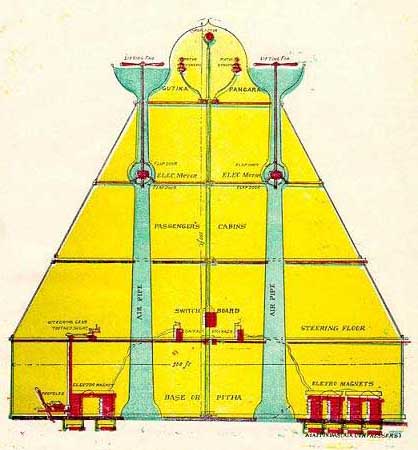

A vimana is a word with several meanings ranging from temple or palace to mythological flying machines described in Sanskrit epics. References to these flying machines are commonplace in ancient Indian texts, even describing their use in warfare. As well as being able to fly within Earth’s atmosphere, vimanas were also said to be able to travel into space and travel under water.
Descriptions in the Vedas and later Indian literature detail vimanas of various shapes and sizes:
  • In the Vedas: the Sun and Indra and several other Vedic deities are transported by flying wheeled chariots pulled by animals, usually horses (but the Vedic god Pusan’s chariot is pulled by goats).
  • The “agnihotra-vimana” with two engines. (Agni means fire in Sanskrit.)
  • The “gaja-vimana” with more engines. (Gaja means elephant in Sanskrit.)
  • Other types named after the kingfisher, ibis, and other animals.
The word comes from Sanskrit and seems to be vi-mana = ‘apart’ or ‘having been measured”. The word also means a part of a Hindu temple. The meaning of the word likely changed in this sequence:
  • An area of land measured out and set apart to be used for sacred purposes.
  • Temple
  • A god’s palace
  • In the Ramayana: the demon-lord Ravana’s flying palace called Pushpaka.
  • In later Indian writings: other flying vehicles, and sometimes as a poetic word for ordinary ground vehicles.
In some modern Indian languages, the word vimana means ordinary real aircraft.
The Buddhist book Vimanavatthu (Pali for “Vimana Stories”) uses the word “vimana” with a different meaning: “a small piece of text used as the inspiration for a Buddhist sermon”.
Sanskrit texts are filled with references to gods who fought battles in the sky using vimanas equipped with weapons as deadly as any we can deploy in these more enlightened times.
In the Ramayana there is a passage in the Ramayana which reads:
    • “The Pushpaka chariot that resembles the Sun and belongs to my brother was brought by the powerful Ravana; that aerial and excellent car going everywhere at will …. that car resembling a bright cloud in the sky … and the King [Rama] got in, and the excellent car at the command of the Raghira, rose up into the higher atmosphere.'”
“Pushpaka” is Sanskrit for “flowery”. It is the first flying vimana mentioned in Hindu mythology (as distinct from gods’ flying horse-drawn chariots). It is also called Pushpaka Vimana.
The special characteristic of this vehicle is, “What ever may be the number of people sitting in it, always there will be one more seat vacant i.e., If N people sit, There will be (N+1) seats”. It was basically a vehicle that could soar the skies for long distances. It shows that even in ancient times, people were curious about flight and might have tried to design flying vehicles.
Pushpaka was originally made by Maya for Kubera, the God of wealth, but was later stolen, along with Lanka, by his half-brother, the demon king Ravana.
The core epic of the Mahabharata mentions no vimanas, but vimanas often occur in the large amount of matter which was added to the Mahabharata corpus later. One example is that the Asura Maya had a Vimana measuring twelve cubits in circumference, with four strong wheels.
The Mahabharata is a veritable gold mine of information relating to conflicts between gods who are said to have settled their differences apparently using weapons as lethal as those we have now. Apart from ‘blazing missiles’, the poem records the use of other deadly weapons. ‘Indra’s Dart’ (Indravajra) operated via a circular ‘reflector’. When switched on, it produced a ‘shaft of light’ which, when focused on any target, immediately ‘consumed it with its power’.
In one exchange, the hero, Krishna, is pursuing his enemy, Salva, in the sky, when Salva’s Vimana, the Saubha, is made invisible in some way. Undeterred, Krishna immediately fires off a special weapon: “I quickly laid on an arrow, which killed by seeking out sound”. Many other terrible weapons are described, quite matter-of-factly, in the Mahabharata, but the most fearsome of all is the one used against the Vrishis. The narrative records:
    “Gurkha flying in his swift and powerful Vimana hurled against the three cities of the Vrishis and Andhakas a single projectile charged with all the power of the Universe. An incandescent column of smoke and fire, as brilliant as ten thousands suns, rose in all its splendour. It was the unknown weapon, the Iron Thunderbolt, a gigantic messenger of death which reduced to ashes the entire race of the Vrishnis and Andhakas.”
It is important to note, that these kinds of records are not isolated. They can be cross-correlated with similar reports in other ancient civilizations. The after-affects of this Iron Thunderbolt have an ominously recognizable ring. Apparently, those killed by it were said to be so burnt that their corpses were unidentifiable. The survivors fared little better, as it caused their hair and nails to fall out.
Perhaps the most disturbing and challenging, information about these allegedly mythical Vimanas in the ancient records is that there are some matter-of-fact records, describing how to build one. In their way, the instructions are quite precise.
The Mahabharata also tells of the awesome destructiveness of the war: “… (the weapon was) a single projectile charged with all the power of the Universe. An incandescent column of smoke and flame as bright as the thousand suns rose in all its splendor… An iron thunderbolt, a gigantic messenger of death, which reduced to ashes the entire race of the Vrishnis and the Andhakas…. the corpses were so burned as to be unrecognizable. The hair and nails fell out; pottery broke without apparent cause, and the birds turned white…. after a few hours all foodstuffs were infected…. to escape from this fire, the soldiers threw themselves in streams to wash themselves and their equipment…” Some say that the Mahabharata is describing an atomic war. References like this one are not isolated; but battles, using a fantastic array of weapons and aerial vehicles are common in all the epic Indian books. One even describes a Vimana-Vailix battle on the Moon! The above section very accurately describes what an atomic explosion would look like and the effects of the radioactivity on the population. Jumping into water is the only respite.
In the Sanskrit Samarangana Sutradhara (Literally, “controller of the battlefield”), it is written:
    “Strong and durable must the body of the Vimana be made, like a great flying bird of light material. Inside one must put the mercury engine with its iron heating apparatus underneath. By means of the power latent in the mercury which sets the driving whirlwind in motion, a man sitting inside may travel a great distance in the sky. The movements of the Vimana are such that it can vertically ascend, vertically descend, move slanting forwards and backwards. With the help of the machines human beings can fly in the air and heavenly beings can come down to earth.”


Introduction

Flight has been the dream of humankind since they watched in awe as birds soared effortlessly through the sky. But, according to accepted history, it wasn’t until the 1780s that two Frenchmen achieved lighter-than-air flight when they were lifted into the air in a hot air balloon near Paris. Then powered, heavier-than-air flight became the goal. And although it was theorized that heavier-than-air flight was possible as early as the 13th century, and in the 16th century Leonardo da Vinci designed winged aircraft and a crude kind of helicopter, it wasn’t until the Wright brothers made their first successful flights at Kitty Hawk in 1903 that powered flight became a reality.
That’s the widely accepted history. Some researchers and a few rogue scientists believe there’s evidence to suggest that humans achieved flight earlier in history – much earlier… so early, they say, that the knowledge of this technology has been lost and ancient stories that recount adventures of human flight have been relegated only to myth.
Is it possible that humans developed the technology to fly in early civilizations – or in civilizations that are now lost to history? Let’s take a look at what some call the evidence – intriguing artifacts, carvings, inscriptions and legends – that they say point to the true record human of flight.
Colombia

Airplane Models

©1996 Lumir G. Janku. All rights reserved. Reprinted with permission.
This object (shown in sketch) was found in 1898 in a tomb at Saqquara, Egypt and was later dated as having been created near 200 BCE. As airplanes were unknown in the days when it was found, it was thrown into a box marked “wooden bird model” and then stored in the basement of the Cairo museum.
It was rediscovered by Dr. Khalil Messiha, who studied models made by ancients. The “discovery” was considered so important by the Egyptian government that a special committee of leading scientists was established to study the object.

As a result of their findings, a special exhibit was set up in the center hall of the Cairo museum, with the little model as its centerpiece. It was even labelled as a model airplane.
To elucidate the reasons for the decision of the committee, almost unprecedented in the field of archeology, let’s consider some aspects of the model. The model has the exact proportions of a very advanced form of “pusher-glider” that is still having “some bugs ironed out”. This type of glider will stay in the air almost by itself—even a very small engine will keep it going at low speeds, as low as 45 to 65 mph., while it can carry an enormous payload. This ability is dependent on the curious shape of wings and their proportions. The tipping of wings downward, a reversedihedral wing as it is called, is the feature behind this capability. A similar type of curving wings are implemented on the Concorde airplane, giving the plane a maximum lift without detracting from its speed.
In that context, it seems rather incredible that someone, more than 2,000 years ago, for any reason, devised a model of a flying device with such advanced features, requiring quite extensive knowledge of aerodynamics. There were no such things as airplanes in these times, we are told by archeologists and historians. But this case seems to be an exception, living in the midst of the rather unimaginative and rigid paradigm of contemporary science. It is also necessary to point out that Egyptians are known to have nearly always made scale-models of projects and objects which they planned to create or build.

Once you purchase your own plane, consult an aviation lawyer
to make sure you cover the all of the bases on plane ownership

Precolombian Airplane Models

Is the concept of an airplane limited to Egypt? That doesn’t seem to be the case. Gold trinkets were found in an area covering Central America and coastal areas of South America, estimated to belong to a period between 500 and 800 CE, but since they are made from gold, accurate dating is impossible and based essentially on stratigraphy which may be deceptive. However, we can safely say that these gold objects are more than 1000 years old.
Whatever this object is supposed to be or represent,
its remarkable resemblance to a modern aircraft or spacecraft is uncanny.

As seen from the pictures, the shape of the sample object is rather ambiguous. The archaeologists labelled these objects as zoomorphic, meaning, animal shaped objects. The question is, what animal do they represent? When we compare these with other objects from the same cultures depicting animals, a curious facet of the comparison would be obvious: the other objects are recognizable, rendered usually with a great accuracy and attention to realistic detail.

There are several types of animals which fly—birds, insects, and several mammals, such as bats and some gliders, for instance flying squirrels, oppossums, and then there are some lizards; there are also some fish which for brief periods glide through the air. There are water animals which seem to fly through the water, such as rays, skates and some selachians. But how does the depicted object compare with these choices? All its features taken into a consideration, we have no match. Seen from above, the object obviously has no fish features, but seems to show rather explicitly mechanistic ones.
The structures just in front of the tail are strongly reminiscent of elevons (a combination of ailerons and elevators) with a slight forward curve, but they are attached to the fuselage, rather than the wings. In any case, they look more like airplane parts than like the claspers of a fish. If the two prominent spirals on the wings are supposed to be a stylized version of the eyes of a ray, then what are the two globular objects positioned on the head supposed to represent? To complicate the identification even more, the spirals on the wings have their copies positioned on the nose of the object, in the opposite direction. When the object is viewed in profile, the didsimilarity to anything from the animal kingdom is even more pronounced. If the zoomorphic explanation is supposed to hold, then why did the artist cut the head off almost three quarters from the body? And why is the nose is practically rectangular and the cut tilted forward, with eyes positioned at either side, when fish eyes are usually more near the center of bodyline and far forward on the head?
What we can make of the semicircular grooves on the inside of the cut? What is it supposed to be—fishwise? And what about the scoop, forward and under the cut? It is a scoop, not just a ridge for drilling a hole through to place the object on a necklace chain. Then there is another rectangular feature, positioned further back at the approximate center of gravity under the fuselage. The wings when viewed from the side are perfetly horizontal, but when seen from the front, they curve slightly downward. The elevators, which are right behind the wings, are positioned on a slightly higher horizontal level and are square-ended, thus a definite geometric shape. Above them is another rectangular shape, with a relief which may be reminiscent of knobs. The tail is equally intriguing. No fish has only a single, upright and perpendicular flange. But this tail fin has an exact shape of fins on modern airplanes. There are also some markings on the tail which are hard to identify, but it does not seem to be anything related to animals, either.
When all the features are taken into an account, the object does not look like a representation of any known animal at all, but does look astonishingly like an airplane. The photos and enlarged outline of the object has been submitted for an analysis to several people from the field of aerodynamics. One of them was Arthur Young, a designer of Bell helicopters and other aircraft. His analysis confirmed that the object contains many features which would fit the airplane hypothesis, but there were several ones which would not fit that scenario. Wings do seem to be in the wrong place—they should be further forward so that their 1/4-chord coincides with the center of gravity. The nose is not like anything on airplanes, as well. So, while the object is suggesting an airplane, some features would not seem to support this hypothesis.
But let’s entertain several possibilities. If we imagine that the separation after the windshield is not a cockpit and that the pilot and the cargo were located somewhere in the main fuselage body, then we can envision the nose as something else. Let’s assume that the nose is actually a jet. If the machine needs to slow down, the jet flow directed against the path of flight would accomplish just that. But how to redirect the jet into the opposite direction? If we envision the nose as a movable part of the plane, turning around the point located where the nose and fuselage meet, thus pivoting the nose downward to tuck it under the fuselage, that would enable the desired effect. What’s more, it will re-adjust the center of gravity and the wings would be just in the right place for a high powered flight. Another problem, though, will appear and that is the drag which would be created by the back of the nose now positioned in front. But that can be attributed to artistic license. That seems to be the case, because several other similar planes feature the back part of the nose tilted more forward, so the angle of the back of the nose when pivoted is more corresponding to aerodynamic principles.
All things considered, the object seems to represent a convertible type of craft, with two possible configurations—one for ascent when the nose is facing backwards, and the other for descent with the nose facing forward. One unsolved item remains—the spirals on the both wings and the nose. According to Amerindian iconography, these spirals have discernable meaning—they represent ascending and descending, depending on whether they are right-oriented or left-oriented, respectively. As the spirals are not only on wings but also on the nose, the meaning is fairly obvious—the wings and the nose (as much) were the features which were directly involved in ascent and descent.
There are other cultures which mention flying vehicles of some sort or another. The most known of these sources are Indian epics, especially the Mahábhárata and other Védic sources as Bhágavata Purána and Rámáyana. The flying devices were called vimánas and were extensively discussed in Vaimánika Shástra, describing multitude of machines with different purposes and capabilities.
Other source of information about flying machines may be considered, such as the Bible and some apocryphal works. The book of Ezekiel seems to be describing the close encounter of a man from a non-technological culture with a device which to him must have been miraculous. We have to put ourselves into his shoes to comprehend his astonishment and the otherworldness of his encounter. The limited scope of knowledge of the world around him, his primitive environment, dictated the language and conceptual framework with which he tried to capture his encounter for fellow tribesmen. For him it seemed that he encountered The God, with his suite of angels, because in his simple world, there was no other interpretation. It is not necessary to reach for an alien type of scenario to explain the encounter; we can entertain a possibility that a remnant of an advanced civilization was still present, in a limited scope, at the time of Ezekiel. But for some, the encounter bears uncanny similarity to the modern-day encounters with UFO’s. Another source of similar material is the Book of Enoch, particularly the Slavic version, which contains some parts which the Greek version is missing. The book not only describes flying in the air, but also through outer space, including the relativistic effects mentioned—Enoch spent several days on a spacecraft, but when he returned to Earth, several centuries had passed by.
There is no shortage of descriptions of flying machines in ancient sources. If we try to extract the core of myths of different provenience and remove the embellishments, we discover to our surprise that flying in ancient times seems to be the rule, not the exception.
Sanskrit texts are filled with references to gods who fought battles in the sky using Vimanas equipped with weapons as deadly as any we can deploy in these more enlightened times. For example, there is a passage in the Ramayana which reads:
“The Puspaka car that resembles the Sun and belongs to my brother was brought by the powerful Ravan; that aerial and excellent car going everywhere at will …. that car resembling a bright cloud in the sky.”
“.. and the King [Rama] got in, and the excellent car at the command of the Raghira, rose up into the higher atmosphere.”
In the Mahabharatra, an ancient Indian poem of enormous length, we learn that an individual named Asura Maya had a Vimana measuring twelve cubits in circumference, with four strong wheels. The poem is a veritable gold mine of information relating to conflicts between gods who settled their differences apparently using weapons as lethal as the ones we are capable of deploying. Apart from ‘blazing missiles’, the poem records the use of other deadly weapons. ‘Indra’s Dart’ operated via a circular ‘reflector’. When switched on, it produced a ‘shaft of light’ which, when focused on any target, immediately ‘consumed it with its power’. In one particular exchange, the hero, Krishna, is pursuing his enemy, Salva, in the sky, when Salva’s Vimana, the Saubha is made invisible in some way. Undeterred, Krishna immediately fires off a special weapon: ‘I quickly laid on an arrow, which killed by seeking out sound’. Many other terrible weapons are described, quite matter of factly, in the Mahabharata, but the most fearsome of all is the one used against the Vrishis. The narrative records:
“Gurkha flying in his swift and powerful Vimana hurled against the three cities of the Vrishis and Andhakas a single projectile charged with all the power of the Universe. An incandescent column of smoke and fire, as brilliant as ten thousands suns, rose in all its splendour. It was the unknown weapon, the Iron Thunderbolt, a gigantic messaenger of death which reduced to ashes the entire race of the Vrishnis and Andhakas.”
It is important to note, that these kinds of records are not isolated. They can be cross-correlated with similiar reports in other ancient civilizations. The after-affects of this Iron Thunderbolt have an ominously recognizable ring. Apparently, those killed by it were so burnt that their corpses were unidentifiable. The survivors fared little etter, as it caused their hair and nails to fall out.
Perhaps the most disturbing and challenging, information about these allegedly mythical Vimanas in the ancient records is that there are some matter-of-fact records, describing how to build one. In their way, the instructions are quite precise.
In the Sanskrit Samarangana Sutradhara, it is written:
“Strong and durable must the body of the Vimana be made, like a great flying bird of light material. Inside one must put the mercury engine with its iron heating apparatus underneath. By means of the power latent in the mecrcury which sets the driving whirlwind in motion, a man sitting inside may travel a great distance in the sky. The movements of the Vimana are such that it can vertically ascend, vertically descend, move slanting forwards and backwards. With the help of the machines human beings can fly in the air and heavenly beings can come down to earth.”
The Hakatha (Laws of the Babylonians) states quite unambiguously: “The privilege of operating a flying machine is great. The knowledge of flight is among the most ancient of our inheritances. A gift from ‘those from upon high’. We received it from them as a means of saving many lives.”
More fantastic still is the information given in the ancient Chaldean work, The Sifrala, which contains over one hundred pages of technical details on building a flying machine. It contains words which translate as graphite rod, copper coils, crystal indicator, vibrating spheres, stable angles, etc.